

US President Donald Trump has rejected a proposal from Iran that would have paved the way for the reopening of the Strait of Hormuz within seven days as part of a wider ceasefire agreement.
Trump disclosed his decision on Saturday while speaking to reporters outside the White House, saying Tehran had submitted a proposal but that he had turned it down.
Iranian officials had presented the plan as a way to end hostilities across the Middle East and restore normal shipping through the strategic waterway, which is a major route for global oil supplies.
Iranian President Masoud Pezeshkian said the proposal had been developed in consultation with Supreme Leader Mojtaba Khamenei. He said implementation would begin once the United States accepted the terms.
Under the plan, Iran would reopen the Strait of Hormuz on the seventh day of a ceasefire. Foreign Minister Abbas Araghchi said the proposal also included the release of frozen Iranian funds, removal of sanctions affecting the country’s oil exports and an end to the US naval blockade.
The proposal followed talks between Araghchi and US envoy Steve Witkoff earlier in the week.
Speaking at the United Nations, Araghchi said Tehran had communicated the seven-day plan through Qatar and was prepared to restore normal maritime traffic if Washington met its conditions.
However, Trump said he was not prepared to accept the proposal. The Wall Street Journal also reported that the US president doubted whether Iran would meet his demands and was considering renewed military action.
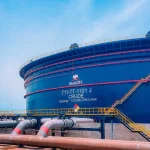
The Strait of Hormuz has become a major flashpoint in the conflict between Washington and Tehran. The narrow waterway, located between Iran and Oman, is one of the world’s most important routes for energy shipments.
Saudi Arabia has called for the Strait of Hormuz and the Bab al-Mandab to remain open, with Foreign Minister Faisal bin Farhan warning against using the waterways to pressure or threaten other countries.
Russia has also offered to support efforts aimed at stabilising the region, according to Foreign Minister Sergei Lavrov.
Pezeshkian said Iran remained open to negotiations but claimed that previous experiences had weakened Tehran’s trust in Washington.
Meanwhile, Iranian Revolutionary Guards spokesman Hossein Mohebi said Iran would continue its actions against the United States until Tehran’s conditions were fulfilled.
The latest disagreement follows the collapse of a US-Iran understanding reached in June that was intended to end the conflict, facilitate the reopening of the Strait and create a framework for discussions on Iran’s nuclear programme.
The dispute over shipping through Hormuz has since continued, with Iran requiring vessels to obtain approval before passing through the waterway and the United States carrying out strikes against Iranian coastal positions.