

Iran has rejected US President Donald Trump’s claim that he could declare the Strait of Hormuz part of US territory, insisting that Tehran retains authority over the strategic waterway.
Iranian Deputy Foreign Minister Kazem Gharibabadi said the strait had historically been under Iranian control and would remain so, adding that decisions on when to open or close the passage would be made by Iran.
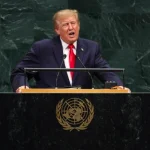
His response came after Trump, speaking at a rally in New York, said he would declare the Strait of Hormuz a US territory after defeating Iran. A White House official later said the president was joking.
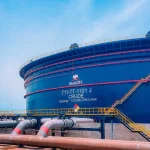
Tensions around the waterway have continued despite diplomatic efforts to ease the conflict. The United Arab Emirates’ state-owned oil company, ADNOC, said one of its vessels was attacked in the strait on Friday.
The UAE subsequently accused Iran’s Revolutionary Guards of carrying out attacks on vessels travelling through the waterway. Iran has previously faced accusations over attacks and restrictions affecting shipping in the region.
Tehran has set several conditions for reopening the strait, including an end to what it described as military aggression against Iran and its regional allies, the lifting of sanctions, access to frozen funds and compensation for damage caused during the conflict.
The Strait of Hormuz remains crucial to the global energy market. Before the war, about one-fifth of the world’s oil and LNG exports passed through the waterway, meaning prolonged disruption could have significant consequences for energy prices and international trade.
Iran has also indicated that it reached an understanding with Oman on a possible arrangement for vessels to transit the strait, with further discussions expected to involve other Gulf countries.
The United States, meanwhile, has imposed a blockade on Iranian ports as part of its efforts to pressure Tehran economically.
With attacks and restrictions continuing, the dispute over the Strait of Hormuz remains a major source of tension between Iran and the United States and continues to pose risks to global energy supplies.