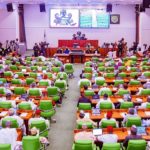


The Senate has launched a new regional security initiative aimed at strengthening safety across the South-West, following rising concerns over criminal activity in several states.
At the South-West Zonal Security Summit held in Lagos, federal lawmakers, security chiefs, traditional rulers, civil society groups and state representatives gathered to discuss a unified approach to tackling emerging threats in the region.
Speaking at the event, Senator Mukhail Adetokunbo Abiru, who leads the South-West segment of the Senate’s National Security Summit Committee, warned that the region could experience more serious attacks if steps are not taken quickly. He cited increasing cases of kidnappings, banditry and violent attacks in rural communities and along major roads as signs that existing measures need reinforcement.
Abiru noted that although the South-West has not witnessed the level of terrorism reported in other zones, recent incidents — including the reported movement of armed groups into areas bordering the region — show the need for urgent action. He urged residents, security agencies and media organisations to work closely and avoid narratives that could inflame ethnic or religious tensions.
Lagos State Governor Babajide Sanwo-Olu, represented by Dr. Ayodele Ogunsan of the Lagos State Security Trust Fund, pushed for a more coordinated, technologically driven regional security plan. He called for Amotekun to be upgraded into a more unified and better-equipped outfit capable of intelligence sharing and joint operations across state boundaries. According to him, regional development cannot thrive without adequate security.
Other lawmakers at the summit, including Senators Jimoh Ibrahim and Gbenga Daniel, advocated for a mix of military and civilian-led solutions to confront modern security challenges. They stressed that insecurity has evolved beyond conventional threats and requires flexible, multi-level responses.
The Lagos State Commissioner of Police, Moshood Jimoh, added that most criminal activities affecting communities originate locally and should be addressed with stronger grassroots intelligence systems.
Traditional rulers, led by the Alara of Ilara, Oba Olufolarin Ogunsanwo, called for community policing, modern equipment and increased funding for security agencies. They also appealed for more job opportunities for young people, saying unemployment fuels criminal recruitment.
Representing socio-cultural interests in the region, Aare Onakankanfo of Yorubaland, Iba Gani Adams, reaffirmed that establishing state police remains a key requirement for long-term regional stability.
Civil society groups, youth organisations, women’s associations and religious leaders at the meeting also emphasised the importance of improving the welfare of security personnel, warning that low morale undermines professionalism and effectiveness.
The summit concluded with renewed commitments to develop a comprehensive security blueprint that integrates local solutions, technology and stronger collaboration between governments and communities.