


By Henry Balogun
“In every democracy, history remembers presidents for the governments they lead and governors for the states they build. Yet beneath every enduring democracy are legislators who quietly shape the laws, institutions and policies that outlive administrations. Among Nigeria’s Fourth Republic politicians, few embody that enduring legislative influence more than Senator Michael Opeyemi Bamidele.”
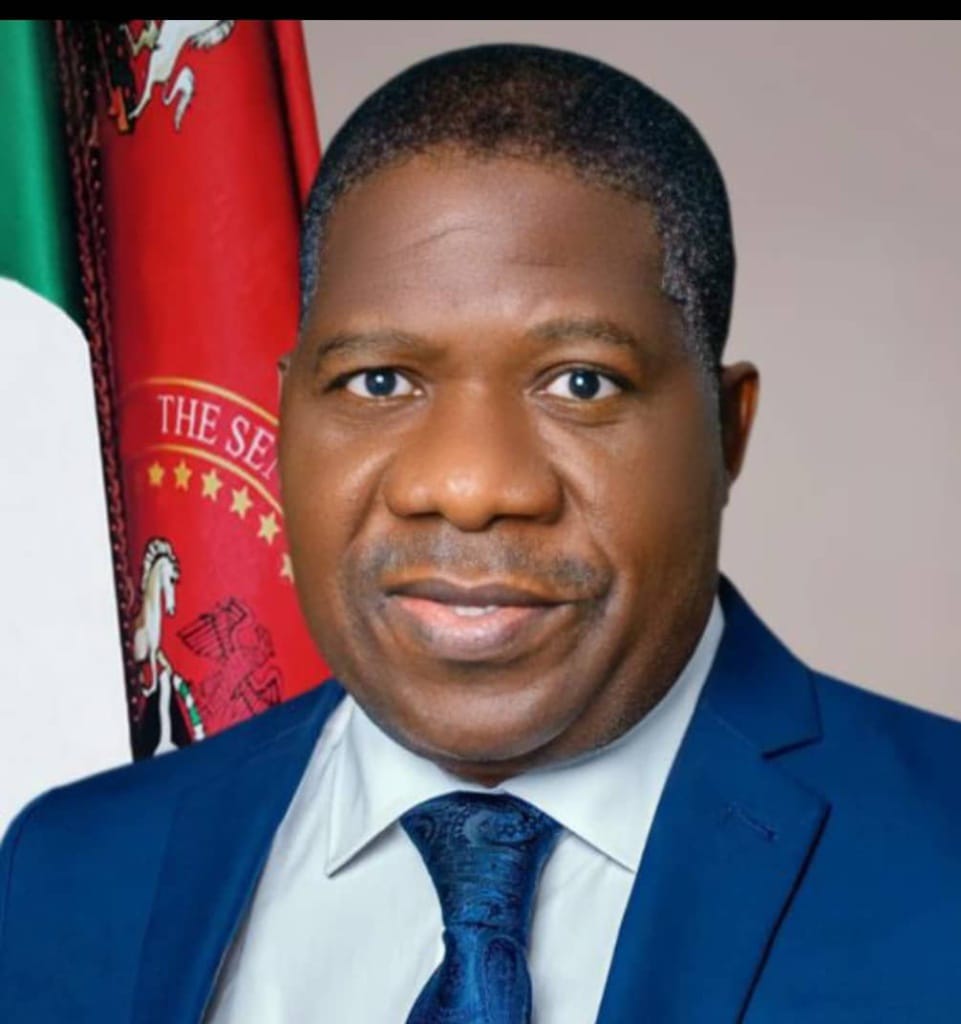
Politics often celebrates those who wield executive power. Governors commission roads. Presidents launch reforms. Ministers announce policies. Their accomplishments are visible, immediate and frequently dominate the national conversation.
Legislators, by contrast, work in a different arena. Their successes are measured less by ribbon-cutting ceremonies than by the quality of laws enacted, institutions strengthened and constitutional principles preserved. Their influence is often understated, yet it is legislation, not executive proclamation, that gives permanence to public policy.
It is within this often overlooked sphere that Senator Michael Opeyemi Bamidele has carved an uncommon place for himself.

Today, he occupies one of the most strategic offices in Nigeria’s constitutional democracy as Senate Leader of the Federal Republic of Nigeria. Yet his journey to that position was neither accidental nor defined merely by political ambition. Rather, it has been a steady progression through virtually every layer of democratic engagement: student activism, human rights advocacy, legal practice, executive governance, parliamentary service and ultimately legislative leadership.
His career mirrors, in many respects, the evolution of Nigeria’s own Fourth Republic.
Long before his emergence as Senate Leader, Bamidele belonged to a generation of young Nigerians whose political consciousness was forged during one of the country’s most turbulent democratic periods. As a student activist and later a lawyer, he became associated with struggles for constitutionalism, civil liberties and democratic governance, experiences that shaped his enduring belief that institutions, not individuals are the true custodians of democracy.

That philosophical foundation would become the defining thread running through his public life.
Unlike many politicians whose careers have been confined to elections and partisan contests, Bamidele’s public service has traversed multiple centres of governance. He learned politics from the grassroots, governance from the executive arm, constitutional practice from the legal profession and nation-building through legislative service.
Each stage would prepare him for the next.
His early years in Lagos exposed him to one of the most significant periods of institutional reform in modern Nigerian governance. Serving successively as Special Adviser on Political and Intergovernmental Affairs, Commissioner for Youth, Sports and Social Development, and later Commissioner for Information and Strategy under Governor Bola Ahmed Tinubu, Bamidele witnessed firsthand the painstaking work of building public institutions, reforming public administration and crafting policies capable of surviving political transitions.
Those years proved transformative.
While many viewed public office primarily as an instrument of political influence, Bamidele increasingly viewed governance through the lens of systems, institutions and policy continuity. Executive office taught him that visionary ideas alone were insufficient; they required legal frameworks, legislative support and institutional discipline before they could deliver lasting public value.
This appreciation for the architecture of governance would eventually define his legislative philosophy.
His transition to the National Assembly therefore represented more than a change of office. It marked the convergence of legal scholarship, executive experience and democratic activism into a legislative career increasingly distinguished by policy development, constitutional engagement and consensus-building.
Since first entering the National Assembly and later the Senate, Senator Bamidele has steadily evolved from an energetic parliamentarian into one of the principal architects of legislative coordination in contemporary Nigeria. His emergence as Senate Leader in the 10th National Assembly was not simply another political appointment. It reflected decades of accumulated experience in law, governance and parliamentary procedure, placing upon him the responsibility of steering the government’s legislative agenda while preserving the Senate’s institutional integrity.
That responsibility extends far beyond presiding over debates or sponsoring government business.
In every mature democracy, the office of Senate Leader is fundamentally an office of persuasion. It demands legal precision, political judgment, institutional memory and the ability to build consensus among lawmakers representing diverse political parties, regional interests and ideological perspectives. The effectiveness of the office is measured less by public visibility than by the quiet ability to transform competing interests into workable legislation.
By that measure, Opeyemi Bamidele has emerged as one of the defining legislative figures of Nigeria’s Fourth Republic.
His story, therefore, is not merely the biography of a lawyer who entered politics.
It is the story of a public servant who has spent more than three decades navigating virtually every dimension of democratic governance, and who now stands at the centre of Nigeria’s legislative process at a time when the nation is undertaking some of its most consequential constitutional, fiscal and institutional reforms.
To understand Michael Opeyemi Bamidele is to understand something deeper than the ascent of a politician through public office. It is to understand how conviction becomes public service, how ideas become policy, how policy becomes law, and how legislation can become a lasting instrument of national transformation.

His journey is still unfolding. But even now, it offers an important study in principled leadership, legislative innovation, and the enduring responsibility of public office. It is a story worth telling, and one that deserves to be told in full.
This article, Opeyemi Bamidele: The Maverick Senate Leader Redefining Legislative Leadership in Nigeria, is the first in a definitive series documenting the life, leadership, and legislative legacy of Senator Opeyemi Bamidele. Drawing on his decades-long journey in public service, the series explores the ideas, policies, reforms, and political convictions that have shaped his emergence as one of the most influential figures in Nigeria’s contemporary legislature. Beyond the offices he has held, it examines the measurable impact of his work on governance, democratic development, and national policy.
About the Author
Henry Balogun is a lawyer, General Counsel, media entrepreneur, and socio-political commentator. He is the publisher of HB Report and NG.News, where he writes extensively on governance, leadership, public policy, law, politics, business, and national development.