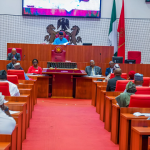


The Federal Capital Territory will not be covered by the proposed state police system because it does not have the constitutional structures that govern Nigeria’s 36 states, the Senate has said.
The Chairman of the Senate Committee on Media and Publicity, Yemi Adaramodu, explained that the FCT is administered by the Federal Government and therefore falls under federal policing arrangements.
Speaking with Saturday PUNCH on Friday, Adaramodu said the territory’s administrative structure differs from that of the states. Unlike the states, the FCT has no elected governor or State House of Assembly.
Instead, the territory is headed by a minister who operates under the Federal Executive Council, while legislative responsibilities for the FCT are handled by the National Assembly.
He explained that these constitutional differences were responsible for the exclusion of the FCT from the proposed state police framework.
The clarification comes amid ongoing efforts by the Federal Government to decentralise policing and establish a system that would allow states to operate their own police forces.
President Bola Tinubu is expected to receive the draft Executive National Policing Bill on September 3. The proposed legislation is expected to provide the operational framework for the new policing structure.
The development was disclosed by the President’s Chief of Staff, Femi Gbajabiamila, who chairs the Presidential Working Group on the National Policing Bill. He also announced a public portal where Nigerians can submit memoranda and position papers on the proposed law.
Under the constitutional amendments supporting state police, state Houses of Assembly would have authority over legislation concerning the creation, administration, funding and oversight of state police forces.
The states would bear the main financial responsibility for their respective police forces, although the Federal Government could provide financial assistance.
A new constitutional provision, Section 216A, allows federal grants or aid to state police based on recommendations from the National Police Council and subject to approval by the National Assembly.
However, the provision does not establish a fixed federal funding contribution or a specific formula for sharing the financial burden.
Adaramodu maintained that the FCT would remain under federal policing because its administration is constitutionally different from that of the states.
As discussions on the proposed policing reforms continue, the Federal Government’s role in policing the nation’s capital is expected to remain unchanged unless the constitutional status of the FCT is altered.