

Beatrice Eyong, the UN Women Country Representative for Nigeria and ECOWAS, provided insight into why the organization does not financially support female politicians.
Eyong explained that UN Women refrains from sponsoring female political candidates due to policy constraints in different nations. Moreover, certain funding sources have expressed the belief that Nigeria possesses substantial financial resources.
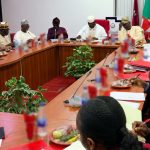
Speaking at a workshop held in Lagos, organized jointly by UN Women, the government of Canada, and the Women Advocates Research & Documentation Centre (WARDC), Eyong addressed a request made by Tolulope Akande-Sadipe, a former Chairperson of the House of Representatives Committee on Diaspora and a current member of the House of Representatives. Akande-Sadipe had urged UN Women and non-governmental organizations (NGOs) to consider providing financial backing to women political candidates to help them tackle the ongoing challenge of inadequate funding.
Eyong acknowledged that she also supports the idea of providing direct funding to candidates and emphasized that funding regulations for political campaigns can be complex and inconsistent across different countries.
While some nations may permit such funding, others have restrictions in place regarding direct financial support from international organizations for political campaigns.
Furthermore, Eyong highlighted an additional factor influencing funding efforts. She revealed that when mobilizing funds, funders often assert that Nigeria possesses substantial financial resources and therefore does not require additional monetary support.
This perspective presents challenges in raising funds for middle-income countries like Nigeria. Eyong shared her experience from working in Mali, where she encountered a more favorable budget compared to Nigeria due to the perception that Nigeria is financially self-sufficient.