

President Bola Tinubu has lauded the Nigeria Governors’ Forum (NGF) for their unanimous support of the four Tax Reform Bills currently before the National Assembly, following months of contentious debates.
The president described the governors’ decision as a significant step towards Nigeria’s economic growth and national unity.
The NGF’s backing of the reforms includes proposed adjustments to the Value Added Tax (VAT) component, addressing concerns that the original bills disproportionately favored southern states.
Governors, including those from Borno and Bauchi, had previously opposed the bills during an October meeting of the National Economic Council (NEC), citing the need for broader consultations.
After discussions with the Presidential Committee on Tax and Fiscal Policy, the governors agreed on a more equitable distribution formula: 50% for equality, 30% for derivation, and 20% for population.
This is a shift from the federal government’s initial proposal, which allocated 20% for equality, 60% for derivation, and 20% for population.
In a statement, President Tinubu commended the NGF for their “bold leadership” and collaborative spirit across political and regional lines.
He emphasized that the tax reforms, aimed at enhancing Nigeria’s business environment and attracting investments, are crucial for the nation’s development.
The President also urged the National Assembly to expedite the passage of the bills to unlock their potential benefits without delay.
However, the decision has sparked criticism from groups like the Arewa Youths Consultative Forum (AYCF) and the Northern Awareness Network (NAN).
The AYCF expressed concern over the Northern governors’ initial opposition to the reforms, accusing them of prioritizing political gain over long-term development.
NAN, meanwhile, called for a transparent explanation of the decision-making process behind the reversal.
The four Tax Reform Bills include measures to rename the Federal Inland Revenue Service (FIRS) to the Nigeria Revenue Service (NRS), provide a comprehensive fiscal framework for taxation, improve tax administration, and establish a Joint Revenue Board to harmonize revenue collection and dispute resolution.
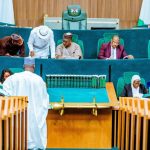
As the National Assembly prepares to deliberate on the bills, all eyes are on how these reforms will shape Nigeria’s economic future and the political landscape.