

A major green energy and economic empowerment initiative was on Tuesday unveiled by the president for the Northeast.
The initiative involves the deployment of 10,330 electric vehicles and plans for the establishment of 50 megawatts of solar-powered mini-grids across the region.
President Bola Ahmed Tinubu also approved a N30 billion Youth and Women Empowerment Fund, in partnership with the Bank of Industry (BoI), to provide financing for micro, small and medium enterprises (MSMEs) across the six states of the region.
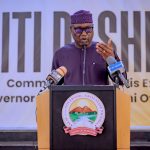
Vice President Kashim Shettima announced the interventions yesterday in Maiduguri, the Borno State capital.
It was during the presidential launch and inauguration of multi-sectoral development projects executed by the North-East Development Commission (NEDC).
The initiatives are part of the Tinubu administration’s broader strategy to accelerate the reconstruction of the insurgency-ravaged region, restore livelihoods, stimulate economic activities and transition towards sustainable energy solutions.
According to a statement by Senior Special Assistant to the President on Media and Communications, Office of the Vice President, Stanley Nkwocha, Shettima said the administration was determined to transform the North-East into a region of peace, prosperity and economic opportunities.
The Vice President noted that despite years of insecurity, displacement and economic hardship, the people of the region had remained resolute in their determination to rebuild their communities and secure a better future.
“We have long maintained, as a region, that our right to tomorrow cannot be confiscated by the violence of today or yesterday. For years, the Northeast has carried the cost of insecurity and hardship without losing sight of our redemption.
“His Excellency, President Bola Ahmed Tinubu, came to office with a pledge to rebuild this region, and the North-East Development Commission is giving that obligation practical expression”, Shettima said.
He explained that the 10,330 electric vehicles, comprising metropolitan buses, taxis and tricycles, alongside supporting infrastructure, would significantly reduce transportation costs, improve mobility and promote environmentally sustainable economic development.
“This investment will not only promote clean energy, lower transport costs and modernise public service delivery and mobility but also support economic growth while protecting our environment”, he said.
Shettima added that the proposed 50 megawatts of solar-powered mini-grids would expand access to electricity, particularly in underserved communities, enhance the productivity of local businesses and strengthen healthcare delivery.
Highlighting other interventions undertaken by the NEDC, the Vice President said that the Commission had built and rehabilitated 51 roads and 35 bridges across the region, while several other infrastructure projects were at various stages of completion.
He said more than 100,000 solar streetlights had also been installed under the Light Up the North-East initiative to improve public safety and stimulate commercial activities.
“Our people must be able to move freely between communities, take their produce to market and seek opportunities beyond their villages”, he stated.
In the education sector, Shettima said the Commission had built 18 mega schools, 232 classrooms and 22 hostels, in addition to interventions in 49 tertiary institutions.
He added that scholarships and bursaries had been awarded to deserving students, including orphans and vulnerable children in secondary schools, stressing that access to quality education remained fundamental to the region’s long-term recovery.
“Our ticket to the future is sound and accessible education”, the Vice President declared.
On healthcare, Shettima said that the NEDC had undertaken 92 projects across hospitals and specialist health facilities, while providing eight MRI and CT scanning units, other medical equipment and medicines to tertiary healthcare institutions.
He disclosed that more than 3,500 houses had been built under the Commission’s mass housing programme to resettle displaced families and provide shelter for vulnerable households.
The interventions, according to him, also include more than 100 water, sanitation and hygiene facilities, as well as over 1,100 solar-powered boreholes and community water supply schemes.
“For those driven from their homes, recovery must begin with a place to call their own”, he said.