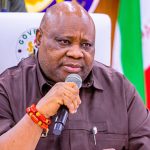
Lagos State Governor Babajide Sanwo-Olu has expressed hope that state police operations will begin by the end of 2026 or early 2027, following approval of a proposed constitutional amendment by 24 state assemblies.
The governor disclosed this on Friday during the inauguration of the Kessington Adebutu Security Trust Fund Building in Ikeja, Lagos, describing the establishment of state police as a long-awaited reform.
Sanwo-Olu said Lagos was prepared to develop a well-equipped and effective police force, with the Lagos State Security Trust Fund expected to provide financial, logistical and operational support once the necessary legal processes are completed.
He stressed that the state would explore innovative ways to mobilise resources and ensure its proposed police outfit had adequate personnel, equipment and other essential facilities.
The governor also assured officers currently serving in the existing police structure that the transition would be handled through cooperation and proper planning, adding that measures would be taken to prevent disruptions to security operations and address concerns about job security.
Sanwo-Olu praised the Lagos State Security Trust Fund for supporting security operations since its establishment in September 2007 under former Governor Babatunde Fashola. He recalled that the fund facilitated the provision of more than 300 vehicles within its first four months.
He called on businesses and individuals to continue contributing to security initiatives, noting that protecting lives and property required cooperation between government and the private sector.
Meanwhile, the Presidential Working Group on the National Policing Bill confirmed that 24 state assemblies had approved the Constitution (Sixth Alteration) Bill, 2026. The approvals meet the constitutional requirement for an amendment of this nature.
The group, chaired by the President’s Chief of Staff, Femi Gbajabiamila, said the amendment could now be returned to the National Assembly for transmission to President Bola Tinubu for assent.
In a statement issued on Friday, Gbajabiamila commended the state legislatures and the National Assembly for advancing the proposal.
The group added that the draft National Policing Bill, 2026, was undergoing review and validation at the Federal Ministry of Justice, with the process expected to be completed by October 30.
It said the proposed legislation would provide the framework for implementing a policing system in which federal and state police operate alongside each other.
The constitutional amendment was sent to the 36 state assemblies on September 16. Among the states that have approved it are Kaduna, Kebbi, Zamfara, Yobe, Oyo, Ogun and Rivers.
However, 12 state assemblies were yet to approve the proposal as of Friday. They include Lagos, Ondo, Ebonyi, Kogi, Niger, Borno, Gombe, Bauchi, Jigawa, Katsina, Kano and Sokoto.
Under the proposed arrangement, the Nigeria Police Force would retain responsibility for national security matters, while state police would focus on enforcing state laws and maintaining public order.
The framework would also allow governors to nominate state commissioners of police, subject to recommendations from the National Police Council and approval by two-thirds of the relevant state assembly.
Federal intervention would remain possible in specified situations, including serious breakdowns of public order or cases involving major abuses.