

President Bola Ahmed Tinubu has restated his administration’s commitment to achieving a $1 trillion economy by 2030, describing the goal as both an economic target and a moral imperative.
Speaking at Wednesday’s Federal Executive Council (FEC) meeting in Abuja, the president said the Renewed Hope policies remain focused on driving investment-led growth, a strategy he believes is the most sustainable path to ending poverty in Nigeria.
“The recent IMF Article IV Report published in July 2025 affirms this trajectory and underscores the importance of investment-led growth,” Tinubu noted.
Renewed Hope Ward Development Programme
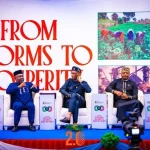
Tinubu highlighted the newly launched Renewed Hope Ward Development Programme — a grassroots initiative covering all 8,809 wards in Nigeria’s 774 local government areas. According to him, the scheme is designed to empower active economic players at the community level through a micro-approach to poverty eradication, with sub-national governments and private sector partners playing a central role in its execution.
“This programme is close to my heart,” he said. “It is aimed at ensuring inclusive growth that leaves no Nigerian behind.”
Call for Collaboration with States and LGs
The president urged state governors to prioritise productivity-enhancing investments, strengthen food security, and deepen collaboration with local governments to accelerate economic growth.
Savings and Investment Reform
Tinubu also stressed the need to boost public savings to catalyse investment. He revealed that public investment currently accounts for just 5% of GDP, largely due to insufficient savings.
He called for a review of deductions from the Federation Account, including fees retained by agencies such as the FIRS, Customs, NUPRC, and NIMASA, as well as the 30% management and frontier exploration deductions by the NNPC under the Petroleum Industry Act.
“We must optimise every available naira to sustain our momentum and finance our growth trajectory — especially in a time of global liquidity constraints,” he said.
Economic Management Team Tasked with Revenue Review
The president directed the Economic Management Team, chaired by the Minister of Finance, to conduct a comprehensive review of all deductions and revenue retention practices and present actionable recommendations to FEC.
Economic Reforms and Stability
Tinubu said his administration’s reforms have dismantled longstanding distortions, restored macroeconomic stability, strengthened investor confidence, and created a more transparent business environment.
“Our economy is now better positioned to attract both domestic and foreign private investment — critical to sustained growth, job creation, and lifting millions out of poverty,” he said.