

President Bola Ahmed Tinubu yesterday said Nigeria has attracted nearly $20 billion in foreign direct investments this year.
Speaking during a panel session at the ongoing Africa CEO Forum, President Tinubu attributed the inflow to reforms aimed at improving transparency, efficiency, and investor confidence in the country.
He said his administration’s policies were positioning Nigeria as an open and competitive destination for investment.
“In Nigeria, we’ve attracted nearly $20 billion in direct investment this year because we are efficient, transparent, and open for business,” President Tinubu said.
He said that Nigeria would no longer permit the export of raw minerals without local value addition, noting that the country possesses the capacity to manufacture products such as electric vehicle batteries from its mineral resources.
He said: “With our metals, we can produce batteries for cars. The private sector brings capital and expertise, but government must de-risk and create the enabling environment. That partnership is how Africa moves forward”.
He also canvassed for stronger economic integration across the continent, urging African countries to move beyond rhetoric and fully activate the African Continental Free Trade Area (AfCFTA).
According to him, Africa needs to put its money where its mouth is and build a new relationship with its own resources.
“We have the African Continental Free Trade Area—it must not sit on the shelf. It needs to be activated properly through collaboration and effective use of resources, not by working in silos,” President Tinubu said.
He advocated an “Africa First” approach to development, insisting that African resources should primarily benefit the continent through local processing and manufacturing.
“We don’t want scavengers and extractors. We want partners who process and manufacture locally,” President Tinubu said.
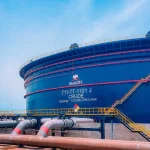
Speaking on industrialisation, President Tinubu cited the success of the Dangote Refinery as proof that Africa could undertake large-scale projects with the right support framework.
According to him, Nigeria overcame years of dependence on imported petroleum products after supporting the establishment of the refinery through policy backing, credit support, and licensing approvals.
He said: “Today Nigeria is a net exporter of PMS, aviation fuel, and other products. Dangote is supplying aviation fuel across Africa and to European airlines”.
He also called for reforms to intra-African trade and financial systems, questioning the continent’s reliance on foreign currencies for trade transactions.