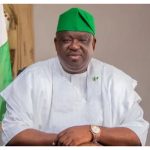


Enugu State Governor, Dr. Peter Mbah, has disclosed how his administration significantly grew the state’s internally generated revenue (IGR) from N25 billion to a projected N600 billion in just two years — a leap he attributes to smart reforms rather than higher taxes.
Speaking during the Biennial Convention of the Nigerian Guild of Editors held in Enugu, Mbah explained that his government’s strategy was to expand the tax net rather than increase tax rates. He said thousands of previously unregistered individuals and businesses were brought into the system, while leakages were plugged through a shift to a fully digital revenue collection process.
“When we came into office, we digitized our entire revenue structure and eliminated cash transactions. That allowed us to track every payment and ensure funds went directly into government accounts,” Mbah said.
According to him, this transformation boosted transparency and improved trust in public finance, allowing for sustainable short-term borrowing when necessary without accumulating long-term debt.
Strong Focus on Institutional Reforms
Governor Mbah emphasized the importance of building lasting institutions rather than depending on individuals. He said over 111 Ministries, Departments, and Agencies (MDAs) in the state have been fully integrated into an e-governance platform to ensure continuity, transparency, and efficiency in public service delivery.
He also revealed that Enugu’s financial records are updated and published monthly, enabling residents to monitor government revenue and expenditure in real time through a public portal.
Land Bank and Agricultural Investment
The governor also highlighted efforts to position Enugu as an agricultural investment hub. He said 300,000 hectares of land have been set aside as part of a land bank initiative to support commercial agriculture, with more than 67,000 hectares already leased to investors.
Mbah said the terms of land use vary: in some cases, the state retains a minority equity stake, while in others, it simply leases the land and supports investors through risk-sharing arrangements.
Pushing Forward with Education Reform
On education, Mbah unveiled his administration’s groundbreaking Smart Green School initiative, which targets children from age three with modern, tech-enabled learning environments. He said the programme aims to raise a generation equipped with 21st-century skills such as robotics, AI, virtual reality, and mechatronics.
“To drive this change, we’ve trained over 18,000 teachers in experiential learning methods. Every Smart Green School has a clinic and is staffed with a registered nurse to ensure each child’s health needs are met alongside education,” Mbah explained.
The initiative, he added, was built into his campaign manifesto and reflects his belief that a state’s true wealth lies in its human capital.
Infrastructure and Urban Expansion
Governor Mbah also addressed urban development, announcing the creation of a New Enugu City that will accommodate 300,000 households. The smart city, currently under development, is designed with modern infrastructure including fiber-optic internet, centralized sewage systems, gas pipelines, and dedicated space for light rail.
“The current city masterplan was over 60 years old. We had to redesign the future. The new city will be plug-and-play, fully serviced, and ready to attract global investment,” he said.
Enhanced Security with Technology
Touching on security, Mbah spoke about the ongoing expansion of Enugu’s Command and Control Centre. He said the system relies on fiber optics instead of satellites, ensuring stable surveillance regardless of weather. The first phase has already been completed, and the second phase is set to extend surveillance to all entry points and rural communities.
Inclusivity in Governance
He noted that contrary to urban migration trends seen in many parts of Nigeria, Enugu is witnessing a reverse flow as developments reach the grassroots.
“All 260 wards in the state are simultaneously seeing projects worth over a billion naira. From schools to healthcare to agriculture, every community has something going on. That’s why demand for construction equipment and skilled labor has surged here,” Mbah said.
Governor Mbah concluded that while some of the policies and investments may not yield immediate results, they are strategic moves to secure the state’s future.
“This is about preparing our children and economy for the next 10, 20 years. If we don’t build that foundation today, there will be no future to talk about,” he said.