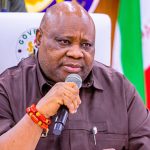
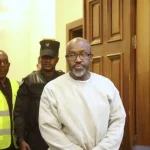
A recent peace deal between Governor Siminalayi Fubara of Rivers State and the Minister of the Federal Capital Territory, Nyesom Wike, has stirred controversy and division among their supporters. The agreement, which followed a closed-door meeting in Abuja mediated by President Bola Tinubu, is being seen by some as a major step toward stability and by others as a troubling surrender.
Sources familiar with the meeting claim that part of the agreement involves Governor Fubara stepping down after completing his current term in 2027, without seeking re-election. He is also said to have accepted that Wike will select all 23 local government chairpersons in the state. While the two leaders publicly declared an end to their long-standing feud, many believe the governor came out of the meeting politically weakened.
Governor Fubara described the reconciliation as a turning point for Rivers and promised to uphold the peace. Wike, for his part, said the issues had been fully resolved, emphasizing that both sides were ready to work together again.
However, the agreement has not gone down well with many of Fubara’s allies. Former commissioner Leloonu Nwibubasa criticized the governor for attending the meeting without key supporters, including his deputy, top aides, and factional Assembly leaders. He called the process one-sided and described it as a political submission, not a true reconciliation.
Adding to the backlash, the Rivers Emancipation Movement rejected the agreement as a superficial arrangement that benefits only a few political elites. They accused both camps of ignoring the wider interests of the people and warned that the deal would collapse, just like previous peace efforts.
Political commentator Deji Adeyanju also expressed skepticism, pointing to Wike’s history of political betrayal. He warned that Fubara might soon find himself undermined and that the deal could prove to be more of a trap than a truce.
Despite the criticism, others welcomed the move as a necessary step toward peace. Fubara’s media aide, Jerry Omatsogunwa, argued that the prolonged crisis had stalled progress in the state, causing businesses to suffer and infrastructure projects to halt. He urged everyone to support the peace efforts for the good of the state.
Former lawmaker Ogbonna Nwuke also praised the president’s role in facilitating the dialogue, saying it was the result of long-standing efforts to bring both sides together. He argued that the key players involved in the dispute were the ones who needed to be present and that the absence of Fubara’s team should not be misinterpreted.
The conflict between Wike and Fubara dates back to early in Fubara’s tenure in 2023. It escalated dramatically in late 2023, leading to impeachment moves, a fire at the Assembly complex, and the eventual declaration of a state of emergency by the president in March 2025. Fubara’s powers were suspended, and a sole administrator was appointed to oversee the state.
Now, with a second round of reconciliation taking place, Rivers residents remain divided. Some see the deal as a chance for progress; others fear it’s just another political maneuver that leaves the state’s real issues unresolved.