By Henry Balogun
From two decades in Parliament to the inner workings of the Nigerian Presidency, Femi Gbajabiamila’s political journey offers a compelling study in leadership, loyalty and the complex business of governing. As the 2027 elections approach, a network of his friends and associates is giving that political history a new expression through Friends of Femi Gbajabiamila for Tinubu 2027 and its mobilisation initiative, Mobilise Nigeria.
In the complex architecture of presidential power, some of the most consequential decisions are shaped far from the cameras, beyond the ceremonial handshakes and outside the public theatre of politics.
Presidents announce policies, address nations, appoint ministers and carry the ultimate responsibility for the direction of government. But between presidential intention and governmental accomplishment lies an intricate machinery of institutions, personalities, competing interests and decisions that must be coordinated before anything meaningful happens.
At the centre of that machinery is often one individual whose influence is considerable, whose responsibility is immense and whose effectiveness may be measured as much by crises prevented as by achievements publicly acknowledged.
The Chief of Staff
For President Bola Ahmed Tinubu, that responsibility rests with Olufemi Hakeem Gbajabiamila, a lawyer, experienced parliamentarian and political strategist whose career has moved from the electoral trenches of Surulere to the highest levels of executive government.
His political journey spans twenty years in the House of Representatives, four years as Speaker and, since June 2023, the demanding responsibility of serving as Chief of Staff to the President.
Yet the significance of Gbajabiamila’s story lies not simply in the offices he has occupied. It lies in the rare combination of legislative experience, political relationships and institutional knowledge he brings to a position that demands far more than access to presidential power.
As Nigeria approaches the 2027 general elections, his career presents an opportunity to examine three interconnected questions: What makes an effective Chief of Staff? How does such an office contribute to the performance of a presidency? And how can relationships cultivated over decades find expression in political activity without compromising the boundaries of public office?
The answers begin long before Aso Rock.
From Surulere to the Speakership: The Making of a Political Strategist
Gbajabiamila entered the House of Representatives in 2003 as the representative of Surulere I Federal Constituency, Lagos State. Over the following two decades, he secured successive electoral mandates while navigating the changing fortunes of Nigeria’s political parties and legislative institutions.
His progression through parliamentary leadership was particularly instructive.
He served in minority and majority leadership positions before emerging as Speaker of the Ninth House of Representatives in June 2019.
Each office required a different understanding of power.
Minority leadership demands the capacity to challenge government and hold competing political interests together. Majority leadership requires negotiation, legislative coordination and the discipline necessary to advance a parliamentary agenda. The Speakership demands something more difficult: reconciling the interests of independently elected lawmakers while preserving the authority and effectiveness of the institution.
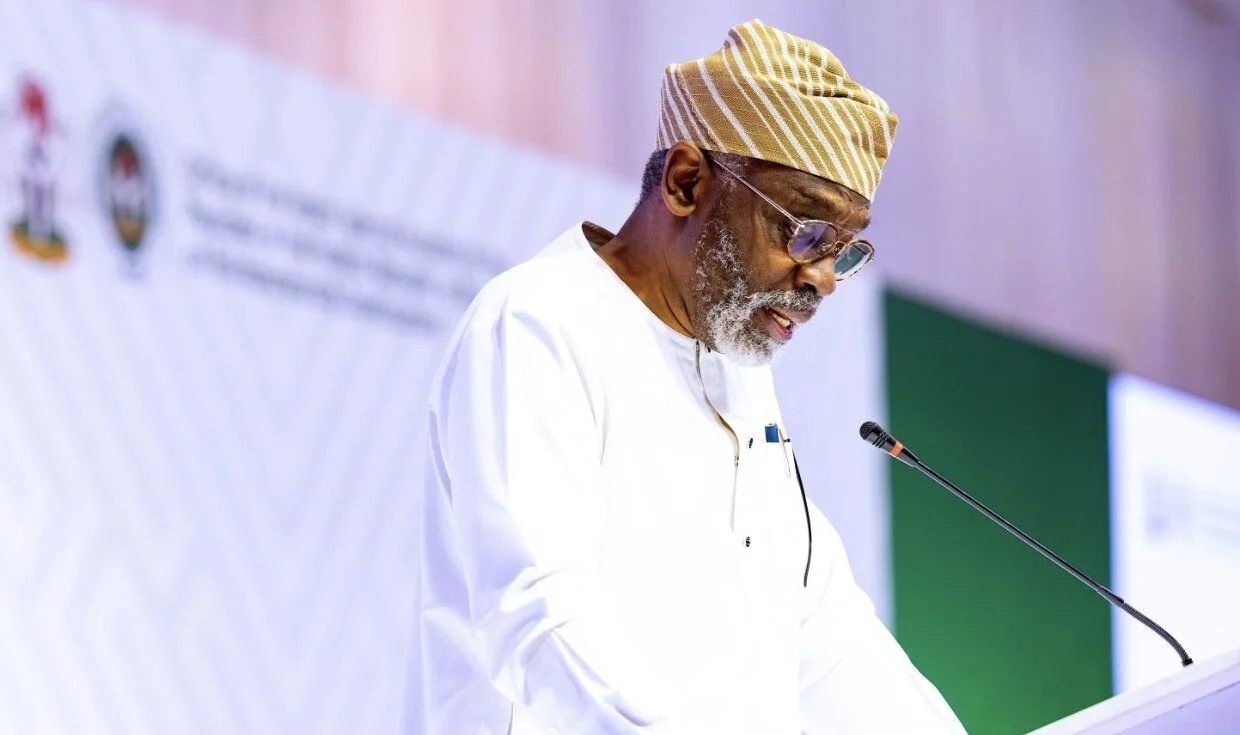
Gbajabiamila experienced these different dimensions of legislative power firsthand. His parliamentary years also placed him within some of Nigeria’s significant political developments, including the debate over presidential tenure extension during the Obasanjo administration and the political realignments that eventually produced the All Progressives Congress. But his legislative identity was not confined to parliamentary debates and political negotiations.
In Surulere, education, infrastructure and economic empowerment featured prominently in his constituency interventions. In February 2022, he presented educational grants to 351 tertiary students, distributed laptops to more than 1,000 teachers and school administrators, and facilitated the distribution of 145 vehicles for transportation, security, healthcare and other community-related purposes. The initiatives were accompanied by investments in school facilities, information technology and road infrastructure. A further empowerment programme in February 2023 involved vehicles, laptops, industrial equipment and financial assistance for traders and small businesses.
Such interventions formed part of his relationship with the constituency that returned him to Parliament repeatedly. Of course, constituency projects must ultimately be judged by their sustainability and impact, not merely the visibility of their commissioning ceremonies. But they illustrate an important dimension of his political formation: an understanding that representation must connect national legislative responsibility with the immediate needs of local communities.
By the time President Tinubu appointed him Chief of Staff on 2 June 2023, Gbajabiamila was no political apprentice. He had spent twenty years acquiring legislative experience, negotiating political interests, managing institutional disagreements and building relationships across Nigeria’s political establishment.
He had learned the parliamentary mechanics of power.
His next assignment would require him to understand its presidential machinery.

The Chief of Staff: Power Without a Separate Mandate
The office of Chief of Staff is frequently described as one of the most powerful positions in government. That description requires qualification.
The Chief of Staff has no independent electoral mandate and cannot exercise the constitutional authority reserved for the President, ministers or other statutory officeholders. His authority derives substantially from the President’s confidence and the responsibilities delegated to him.
Yet few positions offer a comparable vantage point from which to understand the operational complexities of a presidency.
In contemporary executive management, the Chief of Staff is part gatekeeper, part strategic adviser, part coordinator, part political intermediary and part institutional trouble-shooter.
He must protect the President’s time without isolating him from essential information.
He must offer counsel without becoming an echo chamber.
He must recognise capable people, understand ministerial responsibilities, anticipate political difficulties and facilitate cooperation between institutions with competing priorities.
He must also appreciate the importance of presidential communication, ensuring that speeches, policy announcements and public engagements reflect coherent objectives through the appropriate advisory and communications structures.
In corporate language, the office is sometimes likened to that of a chief operating officer. The analogy is useful, though imperfect. Government is not a private corporation, and a Chief of Staff does not possess managerial authority over every arm of the executive.
Nevertheless, the operational principle remains compelling.
A President may possess vision, political authority and the determination to pursue an ambitious programme. But presidential leadership becomes governmental performance only when institutions understand their responsibilities and act upon them.
The Chief of Staff helps sustain that connection.
International experience reinforces the point.
James Baker’s service under United States President Ronald Reagan remains an example of disciplined White House management, while Leon Panetta’s tenure under President Bill Clinton demonstrated the importance of executive coordination in a presidency facing political and administrative difficulties.
Their experiences cannot be transplanted mechanically into Nigeria’s constitutional system. They nevertheless illustrate a principle that transcends jurisdictions: presidential effectiveness depends not only on the judgment of the person elected to lead, but also on the quality of the machinery supporting that leadership.
The best Chief of Staff does not attempt to become a second President.
He helps the President exercise the authority of the office more effectively.
The Tinubu Presidency: Reform, Resistance and the Demands of Delivery
President Tinubu assumed office on 29 May 2023 amid considerable economic and security challenges.
Fiscal pressures, foreign-exchange distortions, inadequate infrastructure, insecurity and declining household purchasing power formed part of the environment confronting the new administration.
Its early decisions, particularly petrol subsidy removal and foreign-exchange reforms, introduced far-reaching economic adjustments.
The administration defended these measures as necessary responses to structural weaknesses in the economy. Critics questioned their sequencing, the adequacy of social protections and the immediate consequences for ordinary Nigerians.
For millions of households, the resulting economic pressures were not abstractions expressed in fiscal or monetary terminology. They were experienced through higher transportation costs, food prices, business expenses and reduced purchasing power.
By October 2026, the economic record presented a more complex picture.
The World Bank reported that Nigeria’s real GDP grew by 4.2 per cent in the first half of 2026, compared with 3.9 per cent during the corresponding period of 2025. Stronger revenues and external balances also reflected improvements in macroeconomic conditions, supported partly by higher international oil prices.
Yet substantial challenges persisted.
Poverty remained widespread, the creation of productive employment continued to demand attention, and improvements in national economic indicators had not translated evenly into better living standards.
The administration’s record therefore cannot be reduced to either the hardship associated with adjustment or the improvements recorded in selected economic indicators.
Both realities matter.
The larger challenge is translating economic stabilisation into affordable living conditions, sustainable employment, reliable public services and measurable improvements in national welfare.
That is the arena in which governmental coordination becomes indispensable.
Ministries must function. Agencies must deliver. Policy disagreements must be resolved. Legislative relationships must be maintained. Administrative bottlenecks must be identified before they frustrate implementation.
No Chief of Staff can properly claim personal credit for the collective achievements of an administration.
But an effective Chief of Staff can help create the institutional conditions within which those achievements become possible.
The distinction is fundamental.
The President defines the direction of government. The institutions of government bear responsibility for implementing it. The Chief of Staff contributes by helping the machinery work coherently.
For Gbajabiamila, that is the central institutional test of his tenure.
The Quiet Interventions and the Public Scrutiny
Much of a Chief of Staff’s work is necessarily conducted away from public attention, making its impact difficult to measure independently.
Nevertheless, certain engagements offer insight into the responsibilities of the office.
In February 2024, Gbajabiamila received representatives of the National Association of Nigerian Students amid concerns over a possible industrial dispute involving university lecturers.
The discussions addressed the federal student-loan programme and efforts to avert further disruption of academic activities.
His intervention did not, by itself, resolve the wider dispute. It did demonstrate how the office can serve as a point of engagement between stakeholders and the executive branch on politically sensitive issues.
Such engagements are part of a larger responsibility: ensuring that concerns requiring executive attention reach the appropriate decision-making structures.
The office also carries considerable reputational exposure.
Because the Chief of Staff occupies a sensitive position close to presidential authority, allegations concerning access, appointments and influence can quickly become public controversies.
Gbajabiamila experienced such scrutiny in connection with the purported Presidential Foreign Investment Promotion Council, an organisation whose claimed federal status became the subject of investigation.
Questions surrounding purported appointment documents and claims of government authorisation drew attention to the Chief of Staff and other administrative institutions.
Gbajabiamila denied wrongdoing and cooperated with investigators.
In August 2026, the Independent Corrupt Practices and Other Related Offences Commission reported finding no evidence connecting him, his office or the State House to the purported organisation. Its investigation identified allegedly fabricated appointment documents and serious failures of institutional verification.
Subsequently, in September, a House of Representatives investigative panel reported preliminary findings that did not implicate him in establishing or authorising the purported council.
The panel further indicated that the documentary evidence before it showed Gbajabiamila had taken steps to alert security and investigative authorities after concerns emerged.
These findings provide a substantive distinction between the allegations made and the evidence established by the investigating institutions.
They do not eliminate the wider governance questions raised by the controversy, particularly how allegedly fabricated documents could pass through multiple levels of public administration.
Indeed, the episode illustrates two important dimensions of executive leadership.
The first is the obligation of public officials to submit to legitimate scrutiny.
The second is the necessity of administrative systems capable of detecting irregularities, protecting official processes and preventing the misuse of presidential authority.
Both are essential to institutional confidence.
For any Chief of Staff, loyalty to the President must coexist with accountability to the institutions of government and the public interest.

A Political Life That Did Not End at Aso Rock
When Gbajabiamila left the House of Representatives for the Presidency, he relinquished an elected office. He did not abandon the political relationships accumulated over two decades.
Those relationships remain an important part of his public identity.
In August 2025, he engaged former legislators and northern political figures at a dialogue organised around President Tinubu’s prospective re-election in 2027.
The engagement drew attention to the continuing political relevance of former lawmakers and the networks developed through legislative service.
It also revealed an important change in Gbajabiamila’s political circumstances.
For twenty years, he sought electoral mandates in his own name.
As the next presidential election approaches, his public political engagements concern the continuation of the President whose administration he serves.
That transition creates opportunities for political association, but it also raises questions about the separation of public administration from partisan activity.
The Chief of Staff remains an official of the Presidency. Political associations formed by private individuals, however closely connected to him, must retain their own leadership, accountability and lawful operational arrangements.
That distinction is especially relevant to a new network emerging from his circle of friends and associates.
Friends of Femi Gbajabiamila for Tinubu 2027: A Network Takes Shape
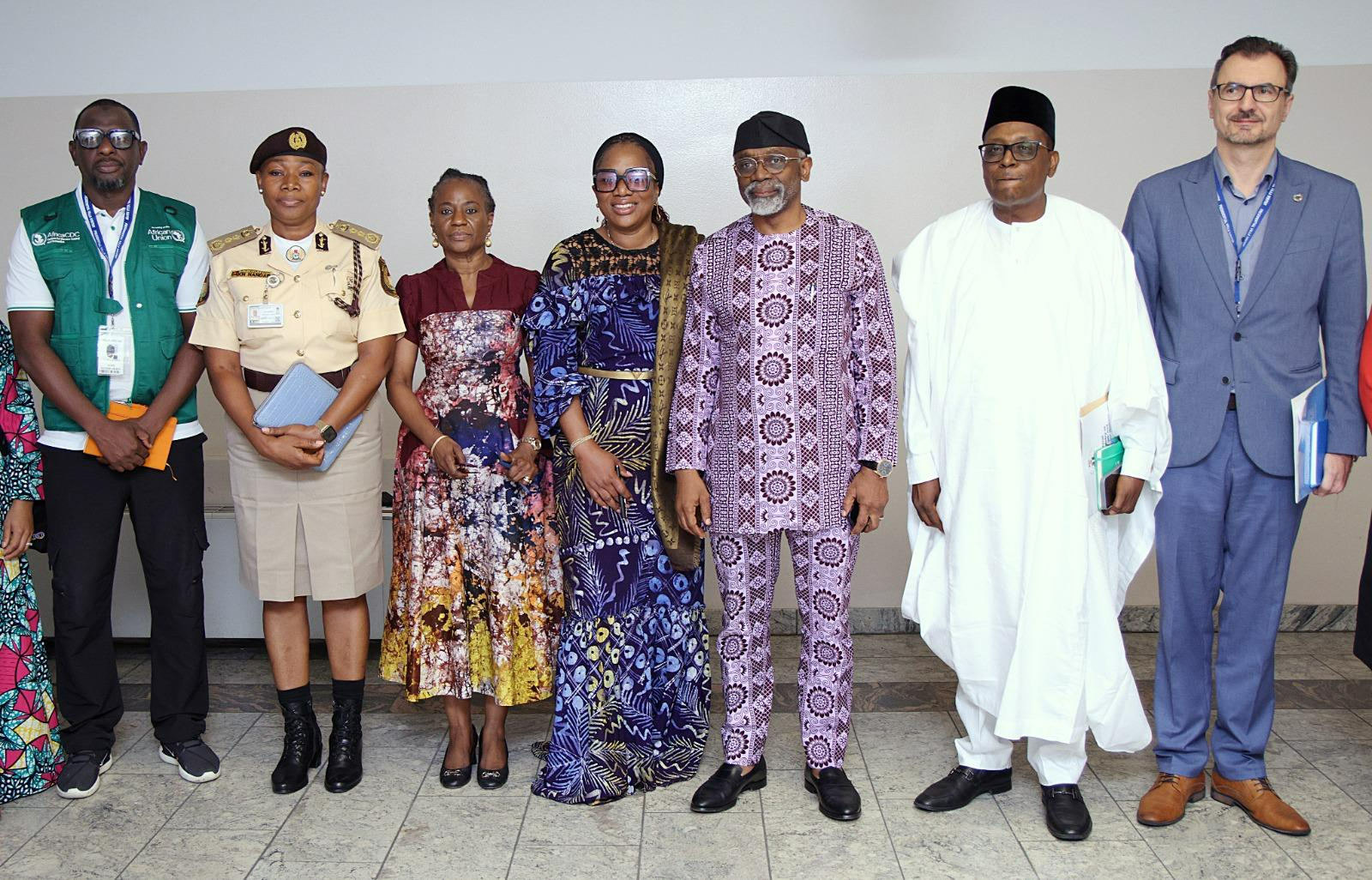
Against the backdrop of Gbajabiamila’s longstanding political relationships and the approaching 2027 elections, a network of his friends and associates has organised under the name Friends of Femi Gbajabiamila for Tinubu 2027 (FOFG).
Its stated purpose is to bring together individuals who share a personal or political association with Gbajabiamila and are committed to supporting President Bola Ahmed Tinubu’s second-term aspiration.
The network encompasses Nigerians and friends of Nigeria at home and abroad, drawing upon relationships and associations that extend beyond geographical boundaries.
According to its organisers, Gbajabiamila has approved the establishment of FOFG and the proposed involvement of its mobilisation initiative.
Crucially, that approval should not be interpreted as personal management of the organisation.
FOFG is a collective initiative of friends and associates of Femi Gbajabiamila. His approval does not make him its executive head, nor does it imply that he directs its programmes, supervises its operations or participates in its day-to-day activities.
Those responsibilities rest with the network’s designated leadership and operational structures.
At the implementation level is Mobilise Nigeria – Powered by Friends of Femi Gbajabiamila for Tinubu 2027.
Mobilise Nigeria is an initiative of FOFG, conceived as the mechanism through which the network intends to execute its strategy, implement its programmes and pursue its stated mission.
Under this framework, FOFG provides the overarching identity, collective purpose and strategic direction, while Mobilise Nigeria is responsible for translating those objectives into organised activities.
It is a single organisational framework, not two competing movements.
The proposed arrangement also makes a distinction between political association and official governmental responsibility.
The organisers intend the network’s activities to complement, rather than supplant, the recognised structures of the All Progressives Congress and any duly authorised presidential campaign organisation.
The emergence of FOFG reflects a familiar feature of political organisation: the capacity of relationships developed over many years to provide a foundation for collective activity without requiring the individual around whom those relationships were formed to assume its operational leadership.
For a serving Chief of Staff, maintaining that distinction is particularly important.
The organisation’s legitimacy must rest on the voluntary participation of its members, the accountability of its leadership and compliance with applicable electoral, campaign-finance and public-service requirements.
Its future role will depend on how its programmes are organised and the nature of its engagement with the broader political process.
Although FOFG’s political purpose is explicit, its organisational development also raises the wider question of how support networks can contribute to substantive public discussion.
Nigeria’s approaching election will involve competing interpretations of the administration’s record, differing priorities for the country’s future and legitimate disagreements over policy outcomes.
Those discussions belong to the electorate and the democratic process.
Beyond the Election: The Larger Measure of a Chief of Staff
As the political calendar advances towards 2027, the responsibilities of the Chief of Staff and the activities of political support networks will attract increasing attention.
Yet the enduring significance of Gbajabiamila’s tenure cannot be measured exclusively by electoral developments. Elections determine who receives the authority to govern. The quality of governance determines what that authority achieves.
For Gbajabiamila, the larger institutional question is whether his unusual combination of legal training, parliamentary leadership, political relationships and executive experience can contribute to a Presidency that functions with greater coherence, responsiveness and discipline.
Can presidential priorities be translated into coordinated action?
Can administrative institutions communicate more effectively?
Can the President receive independent, candid advice while preserving the proper boundaries of governmental authority?
Can problems be identified early enough to prevent avoidable crises?
And can the practices developed within the Presidency become stronger than the individuals responsible for introducing them?
These are not questions peculiar to Gbajabiamila. They confront every presidential Chief of Staff whose responsibilities extend beyond managing access and arranging meetings.
The most consequential contribution such an official can make is institutional rather than personal.
Political relationships may open doors. Presidential confidence may confer influence. Experience may sharpen judgment.
But none of these qualities, standing alone, guarantees governmental effectiveness.
That must be demonstrated through the quality of decisions, the coordination of institutions, the integrity of administrative processes and the results achieved by those responsible for delivering public policy.
Gbajabiamila arrived at the Presidency with twenty years of parliamentary experience, a four-year Speakership and considerable familiarity with the political environment surrounding President Tinubu.
He now occupies a position in which those experiences are tested against the complexities of national executive leadership.
Beyond the ceremonies, beyond the controversies and beyond the calculations of another election lies the defining responsibility of his office.
Not to become a second centre of presidential authority, but to help the legitimate authority of the Presidency function effectively.
For Femi Gbajabiamila, the distinction between occupying the office and leaving an institutional legacy will ultimately be determined there.
Since Nigeria’s return to democratic rule in 1999, the Office of the Chief of Staff has been occupied by individuals of considerable experience and influence, each bringing different strengths to the Presidency. Gbajabiamila’s distinctive contribution lies in the convergence of two decades of legislative experience, political relationship-building, stakeholder engagement and executive coordination. This combination gives his tenure a particular significance in the evolution of the office and provides a compelling basis for examining his place among the consequential presidential Chiefs of Staff of Nigeria’s Fourth Republic.
Because the enduring measure of a Chief of Staff is not how close he stands to the President, but how effectively the institution he serves works for the country.
Henry Balogun is a lawyer and the publisher of HB Report and Renewed Hope News.