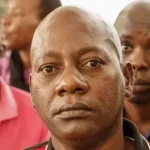
The Caine Prize for African Writing has found no evidence of generative AI use in Zimbabwean writer Simbarashe Kundizeza’s award-winning story, ‘The Blue Fighter’, confirming that it was written by a human.
The award body also upheld Kundizeza’s £10,000 ($13,000) prize, confirming him as the winner of the 2026 edition.
According to a report by the BBC on Wednesday, the accusation follows an article published in a US magazine, ‘The Atlantic,’ titled, “Yet Another Literary Prizewinner Seems to Be AI,” written by Vauhini Vara.
“The prestigious Caine Prize, announced last week, went to a story with many red flags,” the article stated in the header.
She alleged that Kundizeza’s latest story was AI-generated, citing results from an AI-detection tool, Pangram.
However, in a tweet posted via the award body’s X handle on Wednesday, the Chair of the Caine Prize’s board of trustees, Ellah Wakatama, noted that Kundizeza stands as the 2026 award winner after internal review.
She said the organisation adopted a “human-centred” approach in investigating the allegations, which she said were examined “carefully and fairly.”
Wakatama added that the organisation conducted interviews with the Zimbabwean writer, the 2026 judging panel, and the Shallow Tales review where the story was first published, alongside “independent and expert-led metadata analysis of drafts written by the author.”
The board’s chairman stated, “The Board of Trustees of the Caine Prize for African Writing has concluded its internal review of The Blue Fighter, and we confirm that the award stands, and Simbarashe Stein Kundizeza is the 2026 winner of the Caine Prize for African Writing. The review opened on the 11th of October 2026 after an article written by Vauhini Vara and published in The Atlantic suggested that the winning story may have been written using generative AI.
“When concerns were raised, we have a duty as an organisation to look at them carefully and fairly. However, as the Caine Prize and its award have people at the centre – writers, judges, readers, and publishers – we chose to take a human-centred approach to the investigation.
“Our review included interviews with the author, the 2026 judging panel, and the Shallow Tales review where the story was first published. It also included independent and expert-led metadata analysis of drafts written by the author. And from our detailed investigation, we feel the evidence is clear: The Blue Fighter was human-written.
“We now look forward to awarding and celebrating Simbarashe Stein Kundizeza, the winner of the 2026 prize for his story The Blue Fighter, before the end of the year.”
This latest allegation of AI use against a writer comes after Canadian-Haitian author Thélyson Orélien was accused in October 2026 of using AI to write his breakthrough debut novel about migration “C’etait ca ou mourir” (“It Was Either That Or Die”), which was set to be translated into more than 20 countries.
The book was withdrawn from the shortlist for France’s top book prize, the Goncourt, after tests with AI detector Pangram indicated a 100-per cent probability it contained computer-generated text.
“They say that ‘C’etait ca ou mourir’ was written by an artificial intelligence. That’s slander and heresy,” Orelien wrote in a statement sent exclusively to AFP.
BBC reports that Vara’s allegations followed “rows over other literary prizes this year, in particular the Commonwealth Short Story Prize, which was won by Trinidadian writer Jamir Nazir despite allegations that he had used AI, and the withdrawal of Canadian-Haitian author Thélyson Orélien from France’s top literary award, the Goncourt, over allegations he used AI for his first novel, which he denies.”
On October 13, 2026, Kundizeza clarified in a post on his X handle that the story had no element of AI.
“For the avoidance of doubt, I wrote “The Blue Fighter.” I did not use generative AI to write it. It is entirely my own work.
“This story did not appear out of nowhere; it has a concrete, documented history,” he wrote
Kundizeza added that the story was inspired by a poem written by Vangile Gantsho, titled ‘My father’s hand,’ which he read during his residency in Ghana. The poem, he said, inspired him to write about his “family’s experiences in Zimbabwe‚ including my father leaving his accounting profession and the hardships my family faced as a result․”
As seen on Caine Prize’s website publication, ‘The Blue Fighter’ story “follows Tinashe, a young boy whose family falls into financial hardship after his father leaves his profession to pursue his passion for building fish tanks. As money becomes increasingly scarce, Tinashe’s mother is forced to choose between her family’s survival and her husband’s dream. A powerful story that explores fatherhood, ambition, and financial hardship while examining the complicated ways in which family circumstances can shape the people within them.”
However, Vara had told the BBC’s ‘Front Row programme’ that, using her own judgment, she found out that every other previous Caine Prize-winning story she had put through Pangram “came out as 100% human.”
“I also found an earlier 2021 story by the same author. I ran that through Pangram. It also came out as 100% human. And what struck me was that was a really good, interesting story. And tonally, it’s so different from this story, as if the same person hadn’t written both,” she said.
Kundizeza, in his tweet, cautioned that while the article “seems to question the story’s authorship by comparing its style to my other writing; as writers, we develop recurring interests, but we don’t produce work from a single fixed template.”
The accusation had caused a social media uproar, the BBC report said, including comments from African writers with suggestions that such accusations are primarily being made against non-white writers.
The Founder of The Republic magazine, Wale Lawal, wrote on his X handle, quoting The Atlantic’s post, “This is crazy, racist and wildly unethical.”
Zimbabwean writer Joe Ruzvidzo said on X that it was time “to fight this literary stop-and-frisk” against “ALL black/African writers.”
Nigerian publisher Modupe Daramola wrote on X, “The Atlantic, this is extremely shameful. Clearly targeted and very malicious. Sinister. I don’t know what to say.”
The controversy has reignited debate over the reliability of AI-detection tools in determining authorship, particularly in literary competitions where allegations of AI use can affect writers’ reputations and the credibility of award-winning works.