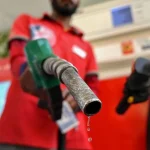


Domestic airlines in Nigeria are grappling with rising operating costs after the price of Jet-A1, commonly used as aviation fuel, recorded a sharp increase across the country.
According to the Airline Operators of Nigeria (AON), the price of the fuel has jumped from around ₦1,000 per litre to about ₦1,800 per litre within two weeks, representing roughly an 80 percent surge.
Industry players say aviation fuel is the most expensive component of airline operations, making up about 30 to 35 percent of total costs. The latest increase is therefore placing significant financial strain on local carriers.
Speaking during an interview on Channels Television, AON spokesperson Prof. Obiora Okonkwo said airlines are currently absorbing the additional expenses rather than immediately increasing ticket prices for passengers.
He explained that despite the spike in fuel costs, many operators have continued selling tickets at rates that are barely profitable in order to avoid adding more pressure on travellers already dealing with economic challenges.
However, Okonkwo warned that airlines may eventually be forced to adjust fares if the trend continues.
He also linked the surge in aviation fuel prices to developments in the global energy market, particularly tensions in the Middle East that have contributed to rising oil prices worldwide.
Okonkwo expressed hope that local refining capacity could help stabilise fuel supply. He suggested that engagement with the Dangote Refinery could offer a possible solution to ensure more reliable and affordable Jet-A1 supply within Nigeria.
In a related development, the AON spokesperson reacted to reports that the Federal Competition and Consumer Protection Commission had sanctioned several airlines over allegations of price fixing.
Okonkwo dismissed the claim, noting that Nigeria’s aviation sector operates in a deregulated environment where individual airlines determine their ticket prices based on operational costs.
He added that different aircraft types and business models mean airlines incur varying expenses, making coordinated fare setting unlikely.
Industry observers say if fuel prices continue to climb, some operators could struggle to sustain operations without policy support or improved local fuel supply.