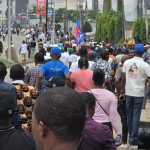
Guineans went to the polls on Sunday in a presidential election widely expected to secure victory for Mamady Doumbouya, the military general who led the 2021 coup that ousted former President Alpha Condé.
Doumbouya’s decision to run comes despite an earlier pledge to step aside and restore civilian rule by the end of 2024. His candidacy has sparked criticism, as the main opposition figures have been barred from contesting. Former Prime Minister Cellou Dalein Diallo, ex-President Condé, and former Prime Minister Sidya Touré are all excluded under the new constitution, prompting the opposition to call for a boycott.
The United Nations human rights chief, Volker Turk, criticized the election campaign, noting reports of intimidation against opposition members, politically motivated disappearances, and restrictions on media freedom.
Some 6.8 million voters were eligible to choose among nine candidates, including Doumbouya, who is running as an independent. With his main rivals sidelined, Doumbouya is likely to win in the first round, with provisional results expected within two days.
Under a recently approved constitution, presidential terms have been extended from five to seven years and can now be renewed once.
The new rules also allow military leaders to run for office, clearing the path for Doumbouya’s candidacy.
Analysts warn that the vote, held in a country rich in minerals but where over half the population lives in poverty, may do little to advance democratic governance. Gilles Yabi, founder of the West African think tank Wathi, said Guinea has effectively returned to the authoritarian practices it has experienced since independence in 1958.
Despite these concerns, Doumbouya highlighted his achievements in infrastructure and mining, pointing to the launch of operations at Simandou, one of the world’s largest iron ore deposits. He also pledged to fight corruption and transform Guinea into an “emerging country.”
With the opposition largely absent, experts say the credibility of the election and voter turnout will be key indicators of its legitimacy.