

Despite Nigeria’s ongoing electricity shortages, more than 10,000 megawatts of power remain unused in idle plants across the country, according to Minister of Power, Adebayo Adelabu.
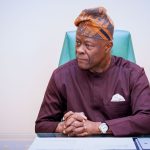
Speaking at the Nigeria Energy Conference in Lagos, Adelabu said Nigeria’s real challenge lies not in power generation but in its weak transmission and distribution systems. He described the situation as “a huge national waste,” noting that several power facilities built with public funds have been abandoned for years while millions of citizens endure blackouts.
“We have over 10 gigawatts of stranded generation capacity across the country,” Adelabu said. “Generation isn’t our immediate problem — it’s about getting that power transmitted and distributed efficiently to homes and industries.”
The minister cited examples of wasted potential, including the Aluminium Smelting Company in Akwa Ibom, which houses six turbines of 90 megawatts each — about 540MW in total — that have been inactive for two decades. He said the turbines, in good condition, could easily boost national supply if connected to the nearby transmission line.
He also pointed to the Port Harcourt Refinery, where an 84MW thermal plant sits mostly unused, with another 120MW expansion possible. “That’s almost 200 megawatts wasting away in one location, while Port Harcourt still complains of poor supply,” he added.
Adelabu criticized the government’s neglect of such assets, saying they could power industries, create jobs, and even support electricity exports if properly utilized.
He called on state governments to take advantage of the Electricity Act 2023, which allows subnational entities to generate and distribute power independently. “States now have the authority to act. They should stop waiting for the federal government and start lighting up their regions,” he said.
Assuring private investors of a more stable policy environment, Adelabu noted that reforms were underway to encourage private-sector involvement in the sector.
“Our policies now support long-term investment. With stronger collaboration and innovation, we can finally build an energy-secure Nigeria,” he concluded.