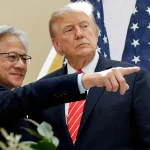


President-elect Donald Trump has urged the US Supreme Court to delay the implementation of a law that could lead to a ban on TikTok or force its sale by ByteDance, the app’s Chinese owner.
The law, scheduled to take effect on January 19 — one day before Trump’s inauguration — mandates that ByteDance sell TikTok to an American company or face a ban in the US.
Trump’s legal team filed a request to give the incoming administration time to pursue a “political resolution” regarding the law.
The legislation, signed by President Joe Biden in April, aims to address national security concerns related to TikTok, particularly its connections to China.
The Supreme Court is set to hear arguments on the case on January 10.
Trump’s position on TikTok has shifted since his first term.
Initially, he sought to ban the app due to national security concerns, particularly citing its popularity among young people in the US.
However, Trump has recently expressed more favorable views, saying that TikTok holds “a warm spot” in his heart for helping him engage with younger voters. This comment came ahead of a meeting with TikTok CEO Shou Zi Chew at Trump’s Mar-a-Lago residence in Florida last week.
TikTok, which boasts over 170 million US users, and ByteDance have argued that the law violates US First Amendment rights.
The two companies are pushing to have the legislation overturned, claiming it unfairly targets TikTok without evidence of wrongdoing.
They highlight that the US government has no evidence that China has accessed or manipulated US user data, with concerns based only on potential future risks.
The law’s proponents, however, argue that Chinese authorities could force ByteDance to hand over US users’ data or influence the app’s content. In their filing, TikTok counters that these concerns are speculative, pointing out the absence of any evidence of such actions.
On the other hand, free-speech advocates have raised alarms, arguing that the proposed ban on TikTok mirrors the censorship measures of authoritarian regimes, a point they have made to the Supreme Court in their legal filings.