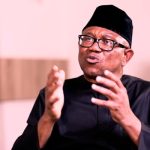
Former President Olusegun Obasanjo has warned that Nigeria’s growing debt could have lasting consequences for future generations, insisting that excessive borrowing is more damaging than leprosy.
Obasanjo made the remarks on Friday at the third Ajibosin Annual Symposium, held at the Olusegun Obasanjo Presidential Library in Abeokuta, Ogun State.
He was reacting to President Bola Tinubu’s recent comment that borrowing was not leprosy, arguing that the government only needed to work hard to repay its loans.
Disagreeing with the President, Obasanjo described the position as unacceptable, saying the effects of debt could extend beyond the present generation.
He said, “For anybody to say debt is no leprosy is absolute nonsense. Debt is worse than leprosy, because leprosy destroys only one person. Debt destroys generations.”
Obasanjo, who secured about $30bn in Paris Club debt relief for Nigeria during his administration between 1999 and 2007, also questioned the country’s rising debt profile and the ability of its leaders to manage the economy.
He criticised the influence of the World Bank and the International Monetary Fund on Nigeria’s economic decisions, arguing that their policies were not necessarily designed to promote the country’s development.
The former President also expressed concern over the depreciation of the naira, comparing its value when he started farming 47 years ago with its current exchange rate of about N1,500 to the dollar.
Beyond the debt debate, Obasanjo cautioned against adopting artificial intelligence without understanding its implications or having control over the technology.
He argued that innovations developed and controlled by foreign interests could be used against countries that depend on them.
Also speaking at the symposium, historian and political commentator, Dr Umar Ardo, warned that Africa could face another form of economic exploitation if it failed to control its data, technological infrastructure and intellectual property.
Ardo said AI offered opportunities for economic development but warned that dependence on foreign technology could deepen existing inequalities.
He compared Africa’s position in the emerging AI economy to its historical experience of supplying human labour and raw materials while other countries controlled the technology and benefited from the value generated.
He cited Nigeria’s continued export of crude oil alongside its reliance on imported refined petroleum products as an example of the continent’s dependence on foreign production capacity.