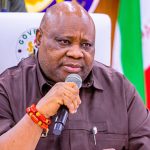
The Chairman of the Economic and Financial Crimes Commission, Ola Olukoyede, is facing increasing calls to resign following the commission’s decision to freeze accounts belonging to the Osun State Government ahead of the August 15 governorship election.
Opposition parties and other critics have questioned the timing of the EFCC’s action, alleging that it could have political implications coming just days before the election.
The EFCC had restricted access to an Osun State Government account with First Bank over alleged suspicious transactions. The commission said it had been investigating the account since March 2026 and was acting within its legal powers.
The development triggered widespread criticism, with the Accord Party demanding Olukoyede’s immediate resignation. The party’s National Chairman, Maxwell Mgbudem, accused the EFCC of showing partisanship in Osun politics and said the commission’s action had damaged public confidence in its leadership.
The New Nigeria People’s Party also supported the call for Olukoyede to leave office, while the National Coordinator of the Obidient Movement Worldwide, Yunusa Tanko, advised the EFCC chairman to consider stepping down to protect his reputation.
The controversy intensified after President Bola Tinubu directed the EFCC to unfreeze the account, describing the commission’s action as embarrassing.
The President’s directive also raised questions about the independence of the anti-graft agency. The Labour Party’s National Publicity Secretary, Ken Asogwa, said the development was worrying because it suggested that the President could directly influence decisions of an agency expected to operate independently.
However, Presidency sources said Olukoyede had not been removed and that the President’s concern was mainly about the timing and manner of the EFCC’s action.
Human rights lawyer and Senior Advocate of Nigeria, Femi Falana, also defended the EFCC chairman, arguing that the commission had acted within its legal authority. He said the President did not have the power to direct the EFCC’s operational decisions.
Meanwhile, the minority caucus of the House of Representatives accused the Federal Government of contradicting itself over the account restriction. The lawmakers questioned statements concerning whether the EFCC had obtained a court order before freezing the accounts.
A certified copy of a Federal High Court order has, however, shown that the EFCC secured judicial approval to freeze three Osun State Government accounts.
The order, issued on August 5 by Justice M.G. Umar of the Federal High Court in Abuja, authorised the EFCC to restrict the accounts while investigating alleged diversion of public funds and money laundering.
The affected accounts include the Osun State Government Federal Allocation Account with First Bank and two Osun State Joint Allocation Accounts with Zenith Bank.
Despite the controversy and calls for his removal, Olukoyede remains in office, while the dispute continues to fuel debate over the independence of the EFCC and the role of federal institutions during elections.