

The Federal Government has announced ambitious reforms aimed at transforming Nigeria’s maritime sector into a key economic driver, with the potential to create over 20,000 jobs.
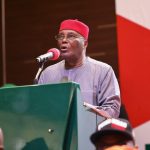
The Minister of Marine and Blue Economy, Adegboyega Oyetola, made the announcement during an interactive session with the Nigerian Guild of Editors (NGE) in Lagos on Thursday.
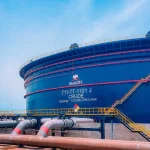
Key to these reforms is the modernisation of Nigeria’s major ports. “The Federal Government has approved the award of contracts for the modernisation of the Western Ports, including the Lagos Ports Complex, Apapa, and Tin Can Island Port Complex,” Oyetola revealed. “Efforts are underway to fast-track the procurement process for the modernisation of the Eastern Ports as well.”
The government is also pushing forward with new port projects, including the development of Badagry, Ilaje, Olokola, Agge, Ibaka, Burutu, Snake Island, and Bakassi Deep Seaports. Inland trade is being supported through the Funtua Inland Dry Port in Katsina and projects in Abia, Plateau, and Borno.
Oyetola highlighted the positive impact of policy reforms on export volumes, citing data from the National Bureau of Statistics (NBS). “We are seeing positive trade balances due to improvements at the export terminals,” he stated.
A significant component of these reforms is the National Single Window (NSW), a digital platform designed to streamline compliance processes.
“To complement this, we are finalising the Port Community System, an electronic platform that centralises and automates all port-related processes,” Oyetola said.
The Minister also underscored the government’s success in combating piracy. “Nigeria has recorded zero piracy incidents for three consecutive years in the shipping lanes of West Africa and the Gulf of Guinea,” he stated, attributing this success to the Deep Blue Sea Project and Falcon Eye Surveillance Systems.
In addition, Oyetola announced that Nigeria is set to strengthen its position in global maritime governance, with the country’s candidacy for a Category C seat in the International Maritime Organisation (IMO) officially approved by President Bola Tinubu.
The Minister also revealed that the long-awaited Cabotage Vessel Financing Fund (CVFF) would soon be disbursed. “NIMASA and other stakeholders are finalising the framework, and Development Banks will oversee disbursements,” Oyetola confirmed.
The Ministry has seen significant revenue growth, with a 77% increase in government revenue from January to November 2024. The Presidential Enabling Business Environment Council (PEBEC) also awarded the Ministry a commendation for its outstanding performance in the 120-Day Regulatory Reform Accelerator (RRA) program.
In closing, Oyetola emphasized the importance of collaboration with the media to ensure continued success. “This engagement is not just about presenting our achievements; it is about fostering dialogue and building partnerships,” he said.
NGE President, Eze Anaba, praised Oyetola’s leadership, expressing confidence that the Minister’s experience would steer the sector to new heights. “The marine and blue economy sector will enjoy robust progress under his leadership and guidance,” Anaba added.
With these reforms and initiatives, the Ministry of Marine and Blue Economy is poised to unlock the full potential of Nigeria’s maritime industry, positioning it as a cornerstone of national prosperity.