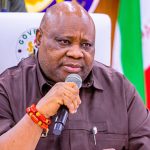
Olufemi Soneye, the Chief Corporate Communications Officer (CCCO) of the Nigerian National Petroleum Corporation Limited (NNPCL), shared insights into the company’s ambitious pipeline and depot rehabilitation project, which he describes as a pivotal step in resolving Nigeria’s long-standing petroleum supply challenges and reinforcing the nation’s energy infrastructure for the future.
NNPCL has been under scrutiny for the challenges facing its refinery rehabilitation efforts.
When questioned about the sustainability of these efforts, Soneye expressed confidence in the direction the company is taking, emphasizing that despite inevitable hurdles, progress has been made.
“The NNPC Ltd. is working towards transforming Nigeria into a self-sufficient producer and net exporter of refined petroleum products, and the rehabilitation of the Port Harcourt and Warri refineries is a significant milestone in this journey,” he said.
However, despite these advancements, Soneye acknowledged the deep-rooted challenges plaguing the sector, particularly regarding the state of pipeline infrastructure.
“Nigeria’s 5,120 km network of crude oil and product pipelines, connected to 22 storage depots, is dilapidated, leading to inefficiency in product transportation.
The problem is compounded by frequent pipeline vandalism and security concerns, which disrupt the smooth supply of petroleum products,” he stated.
Soneye went on to discuss how these issues have historically led to refinery shutdowns due to the inability to evacuate products. “In the past, refineries were forced to shut down because storage tanks were full and products couldn’t be transported.
This has led to an over-reliance on trucks, causing road accidents, fires, and higher transportation costs,” he noted.
To address these challenges, NNPCL has introduced an innovative financial model for the pipeline and depot rehabilitation project—the Finance, Build, Operate, and Transfer (FBOT) approach.
Unlike the refinery rehabilitation, which was funded through loans, the FBOT model allows contractors to finance the project, operate it for a period to recover their investment, and then transfer ownership back to NNPCL. “We are committed to addressing this through a structured financial model and strategic partnerships,” Soneye added.
The pipeline and depot infrastructure has been divided into four lots, with each assigned to different private contractors.
Key rehabilitation activities include the construction of new pipelines to replace obsolete ones, the implementation of advanced technologies to prevent pipeline vandalism, and the modernization of storage terminals. These efforts, Soneye explained, aim to boost refining capacity and enhance supply chain efficiency.
While the scale of the project is large, progress has been tangible. “Lot 1, which involves the rehabilitation of pipelines from Bonny to Port Harcourt, has already begun, enabling seamless product loadouts. Similarly, Lot 2, covering pipelines from Escravos to Warri Refinery, has also seen significant progress,” he shared.
Rehabilitation of pipelines associated with the Kaduna Refinery is underway, as is the rehabilitation of the Lagos coastal pipeline network.
Soneye emphasized that NNPCL is working diligently with contractors to expedite the project. “Mobilization letters have been issued to the companies involved, and we are working closely with the concessionaires to fast-track execution,” he said.
When asked about the timeline for completion, Soneye projected that the pipeline and depot rehabilitation project would be completed within two to three years.
Once finished, the project promises several benefits: sustainable crude oil supply to refineries, reduced reliance on truck transport, improved energy security, and a reduction in fuel importation.
“This initiative will lower transportation costs, reduce road hazards caused by fuel tankers, and ultimately transform Nigeria’s energy sector,” he concluded.
NNPCL’s pipeline and depot rehabilitation project is set to address the systemic issues that have plagued the petroleum sector for years, paving the way for a more secure and self-sufficient energy future for Nigeria.
With a structured financial model and committed execution, Soneye remains optimistic that the project will be a game-changer for the country’s energy infrastructure.