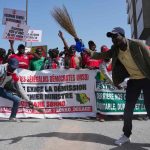
The Nigeria Labour Congress (NLC) strike scheduled for December 1 faces challenges, as several state chapters of the union have opted out of the planned industrial action.
This follows the government’s approval of a new minimum wage of N70,000 for workers, which was announced by President Bola Tinubu in July.
While many states have agreed to implement the new wage, 13 states and the Federal Capital Territory (FCT) have not yet initiated the policy.
The states affected by the delay include Abia, Akwa Ibom, Ebonyi, Ekiti, Imo, Nasarawa, Kaduna, and Katsina, among others.
In response, the NLC had announced a strike in these states to press for the wage increase.
However, some state chapters have now withdrawn from the strike.
NLC leaders in Imo, Sokoto, Oyo, Akwa Ibom, and Katsina cited agreements with their state governments as the reason for their decision to opt out.
Katsina’s NLC Chairman, Hussaini Danduna, confirmed that workers in the state would not participate in the strike, stating, “We have signed an agreement with the Katsina State Government, and based on this, we are not going to join the strike action declared by the national executive council of our union.”
Similarly, Imo NLC Chairman Uche Chigaemezu clarified that there were no plans to strike in Imo State, stating, “We cannot think of embarking on any strike because we have reached an agreement with the state government led by Governor Hope Uzodimma.
He has shown commitment to the payment of N70,000 minimum wage to Imo workers. We have communicated our position to the national body, and they are aware of the decision of the government to pay the minimum wage soon.”
Despite the withdrawal of some chapters, states like Kaduna, Nasarawa, Zamfara, and the FCT have confirmed their participation in the strike.
The Abia State chapter remains undecided.The NLC national leadership, however, remains firm on the planned strike.
National Treasurer Akeem Ambali emphasized that the union had mobilized its affiliates and directed them to prepare for industrial action in states yet to implement the minimum wage.
Ambali also criticized states that had only given verbal commitments without formal agreements, warning that such states would not be exempt from the strike